Our Research
An overview of the variety of projects happening within the lab
Family Brain Program – Intergenerational Neuroimaging
Location: UConn & UCSF
Age: Families w/children ages 7-12 years old
Currently Recruiting Study Participants: No
Genes and the environment together shape how the brain works. However, the details of this complex interaction, as well as how it impacts parent-child brain similarity, is currently understudied. Our innovative study seeks to answer these questions, providing unique insight into how language, math, and reading abilities are transmitted over generations.
We are inviting families who have used assisted reproductive technologies (such as IVF) and families with naturally conceived children to participate by taking a series of brain scans and paper and pencil tests. Your participation will help us understand the unique evolutionary basis of linguistic and mathematical functions in the brain.

Brain Letterbox Study – UCSF
Location: University of California, San Francisco (UCSF)
Age: Children 7-12 years old & adults
Currently Recruiting Study Participants: No
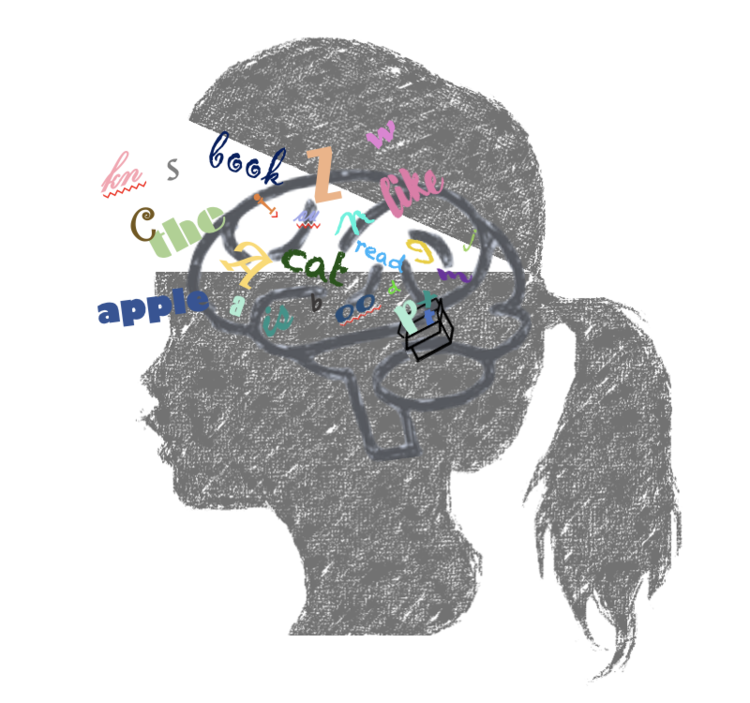
Learning to read triggers a series of changes in brain structure and function. Among those, the most striking is the specialization of the brain’s “letterbox”, a region of visual cortex, a region of visual cortex which learns to process letters and words. Although lower activation of the brain’s letterbox is a landmark of dyslexia, we currently do not understand the core differences between people with dyslexia and typical readers in how this region processes words.
The purpose of this study is to better understand how the brain encodes words, how these representations develop, and how they differ in dyslexia. Achieving a better understanding of these processes will help us in the long run to better support children with dyslexia.